38 risk of zero coupon bonds
Zero Coupon Bonds Zero Reinvestment Risk: Zero Coupon Bonds do not pay interests periodically. Hence, investors do not receive cash periodically which they have to reinvest. Usually, the high annualized yield rate of the Zero Coupon Bonds is equivalent to the return rate if the cash flow is reinvested periodically. Zero-Coupon Bonds : What is Zero Coupon Bond? - Groww But the Zero Coupon bonds remove the reinvestment risk. Zero Coupon bonds do not allow any periodic coupon payments and thus a fixed interest on Zero Coupon bonds is assured. Fixed returns: The Zero Coupon bond is an ideal choice for those who prefer the long-term investment and earn in a lump sum. The reason behind this is the assurance of a ...
Zero-Coupon Bond - The Investors Book Company's Survival: Since the maturity period of a zero-coupon bond is quite lengthy; it is challenging for the investor to trust that a company would survive until the maturity date. Interest Rate Risk: If the interest rate of the bond falls, its issuer may redeem it through call provision before maturity and at a lower price.
Risk of zero coupon bonds
Zero-Coupon Bonds: Pros and Cons - Management Study Guide No Reinvestment Risk: Zero-coupon bonds do not have any reinvestment risk. This is because the bond does not pay interest periodically. Hence, investors do not receive any cash flow which they have to reinvest periodically. Zero-coupon bond - Wikipedia Pension funds and insurance companies like to own long maturity zero coupon bonds because of their high duration. That means that the bonds' prices are particularly sensitive to changes in the interest rate, and so offset, or immunize, the interest rate risk of the firms' long-term liabilities. Taxes Zero-Coupon Bond: Formula and Excel Calculator - Wall Street Prep Zero-Coupon Bond Risks Interest Rate Sensitivity One drawback to zero-coupon bonds is their pricing sensitivity based on the prevailing market interest rate conditions. Bond prices and interest rates have an "inverse" relationship with one another: Declining Interest Rates Higher Bond Prices Rising Interest Rates Lower Bond Prices
Risk of zero coupon bonds. How to Calculate a Zero Coupon Bond Price - Double Entry Bookkeeping The zero coupon bond price or value is the present value of all future cash flows expected from the bond. As the bond has no interest payments, the only cash flow is the face value of the bond received at the maturity date. Zero Coupon Bond Pricing Example. Suppose for example, the business issued 3 year, zero coupon bonds with a face value of ... Zero Coupon Bond Definition and Example | Investing Answers What are the Risks of a Zero Coupon Bond? If you sell a zero coupon bond before the maturity date, you could face interest rate risk. Meaning, your investment may go down in value if interest rates go up. The longer the maturity date, the more risk you'll face. Understanding Zero Coupon Bonds - Part One - The Balance Risk of Default Corporate zero coupon bonds carry the most risk of default and pay the highest yields. Many of these have call provisions. How big of a discount will you pay? Here is an example of how zero coupon bond prices can change: For example, assume that three STRIPS are quoted in the market at a yield of 6.50%. Should I Invest in Zero Coupon Bonds? | The Motley Fool Specifically, if rates rise, they make the value of your zero coupon bond go down, potentially forcing you to sell at a depressed price if your timing is bad. Another problem with zero coupon bonds...
Zero-Coupon Bond Definition - Investopedia Most zero-coupon bonds trade on the major exchanges. 1 Zero-coupon bonds are like other bonds, in that they do carry various types of risk, because they are subject to interest rate risk if... Zero Coupon Bond -Features, benefits, drawbacks, taxability, & FAQs Trust factor of Issuer: Since zero-coupon bonds have lengthy maturity periods, it can be challenging for investors to continue their trust in the issuer till the maturity date arrives. Interest Rate Risk: Zero-coupon bonds that are sold before maturity are subject to interest rates risk. The Pros and Cons of Zero-Coupon Bonds - Financial Web Zero-coupon bonds are a type of bond that does not pay any regular interest payments to the investor. Instead, you purchase the bond for a discount and then when it matures, you can get back the face value of the bond. ... Another problem with zero coupon bonds is that they have a higher default risk than traditional bonds. The reason behind ... The One-Minute Guide to Zero Coupon Bonds | FINRA.org Like virtually all bonds, zero-coupon bonds are subject to interest-rate risk if you sell before maturity. If interest rates rise, the value of your zero-coupon bond on the secondary market will likely fall. Long-term zeros can be particularly sensitive to changes in interest rates, exposing them to what is known as duration risk.
Zero Coupon Bond | Investor.gov Because zero coupon bonds pay no interest until maturity, their prices fluctuate more than other types of bonds in the secondary market. In addition, although no payments are made on zero coupon bonds until they mature, investors may still have to pay federal, state, and local income tax on the imputed or "phantom" interest that accrues each year. Why do zero coupon bonds have higher interest rate risk than ... - Quora Answer (1 of 5): They say timing is everything! That's certainly true in finance. The answer hinges on the concept of duration. Assume that credit risk can be ignored for a borrower who wants to borrow for 20 years. You can choose between a standard coupon-paying bond that pays interest in equal ... Bonds - How to reduce market risk - livrodoforex Since there are only 2-3 issues of zero-coupon bonds on the market, we have to use bonds with a coupon and here things get complicated. ... Since wallet immunization can also be used with corporate bonds you should then remember about the credit risk and the risk of early redemption, which may force you to adjust the portfolio composition or ... How to Buy Zero Coupon Bonds | Finance - Zacks The bonds are sold at a deep discount, and the principal plus accrued interest is paid at the bond's maturity date. The less you pay for a zero coupon bond, the higher the yield. A bond with a ...
All about zero coupon bonds | Investopedia
What Are Zero Coupon Bonds And Their Risks- Tavaga | Tavagapedia Risks associated with Zero-Coupon Bonds As there is no coupon rate, ZCBs are safer as compared to other fixed-income instruments, which are sensitive to changes in interest rates. But ZCBs do possess risk subjected to changes in interest rates if sold before maturity.
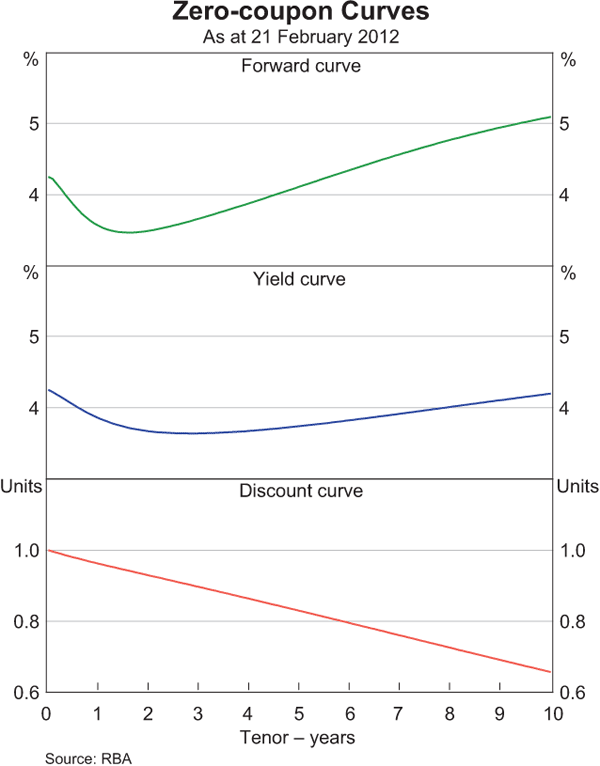
Extracting Information from Financial Market Instruments | Bulletin ...
What Is a Zero-Coupon Bond? Definition, Advantages, Risks As a result, zero-coupon bond prices are more volatile — subject to greater swings when interest rates change. You have to pay taxes on income you don't get Even though you're not actually getting...
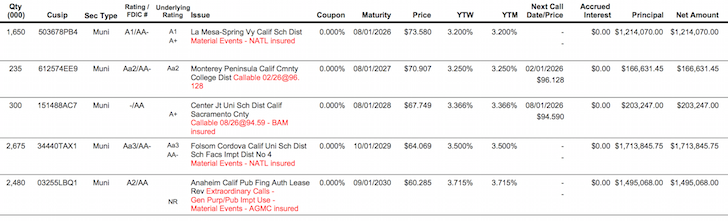
The Allure Of Zero Coupon Municipal Bonds: A Low Risk Investment With ...
Advantages and Risks of Zero Coupon Treasury Bonds Because of their sensitivity to interest rates, zero-coupon Treasury bonds have incredibly high interest rate risk. Treasury zeros fall significantly if the Fed raises interest rates. They also...

Zero Coupon Bonds Explained - Fervent | Finance Courses, Accounting Courses
Mapping Zero-coupon Bonds to Risk Factors - Finance Train The first coupon is sensitive to the 6-month interest rate, the next coupon is sensitive to the one-year interest rate, and the last (10th) payment will be sensitive to the 5-year zero-coupon interest rate. For the purpose of mapping each cash flow, the risk manager will need to identify a set of zero-coupon bonds at different maturities.

Bootstrapping | How to Construct a Zero Coupon Yield Curve in Excel?
Zero Coupon Bond (Definition, Formula, Examples, Calculations) Zero-Coupon Bond Value = [$1000/ (1+0.08)^10] = $463.19. Thus the Present Value of Zero Coupon Bond with a Yield to maturity of 8% and maturing in 10 years is $463.19. The difference between the current price of the bond, i.e., $463.19, and its Face Value, i.e., $1000, is the amount of compound interest. Compound Interest Compound interest is ...

Zero Coupon Bonds - Part 5 of New Series - How To Invest... | Bonds ...
What is a Zero-Coupon Bond? - Realonomics Do zero-coupon bonds have reinvestment risk? What is another name for zero-coupon bond? What are the characteristics of zero interest bonds? Under what situation can a zero coupon bond be selling at par to its face value? What is the role of a zero coupon bond in a structured product?
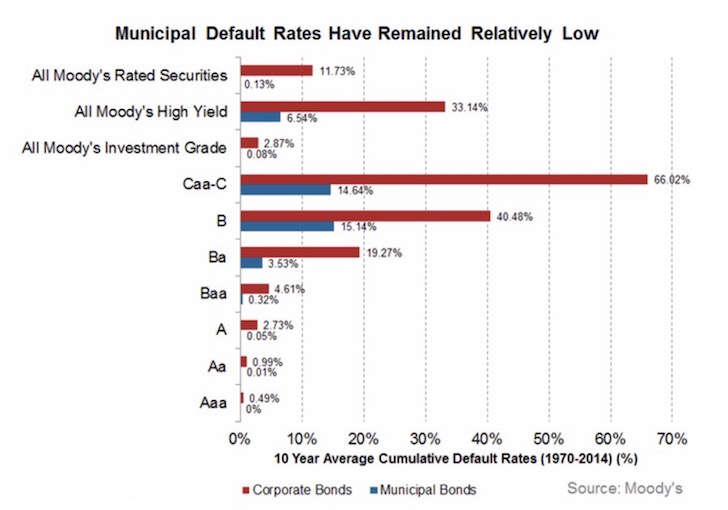
The Allure Of Zero Coupon Municipal Bonds: A Low Risk Investment With ...
Risk-Neutral Pricing Formula for Zero-coupon bonds with Default Risk ... I am looking for the equations or papers showing the risk-neutral pricing for zero-coupon bonds including default risk. I already tried Googling and searching SSRN and Jstor. bond zero-coupon risk-neutral. Share. Improve this question. Follow asked Apr 4, 2020 at 17:02. Jake Freeman Jake Freeman. 158 4 4 ...

Bond Basics: Zero-Coupon Bonds | Kiplinger
Zero-Coupon Bonds: Definition, Formula, Example, Advantages, and ... They are safe investment instruments, and have a lower element of risk involved. Long Dated zero coupon bonds are said to be the most responsive to interest rate fluctuations. Therefore, in case of longer time duration (a higher 'N'), it might prove to be profitable for the bond holder. Disadvantages of Zero-Coupon Bonds

Zero Coupon Treasury Bonds Performance Review
Zero-Coupon Bond - Definition, How It Works, Formula A zero-coupon bond is a bond that pays no interest. The bond trades at a discount to its face value. Reinvestment risk is not relevant for zero-coupon bonds, but interest rate risk is relevant for the bonds. Understanding Zero-Coupon Bonds As a zero-coupon bond does not pay periodic coupons, the bond trades at a discount to its face value.
Advantages and Risks of Zero Coupon Bonds - India Dictionary
Pros and Cons of Zero-Coupon Bonds | Kiplinger With retirement years away for you and today's low interest rates, we'd advise against buying zeros. These bonds don't make regular interest payments. Instead, they're sold at a big discount to ...
PPT - Interest Rates and Bond Valuation PowerPoint Presentation, free ...
Zero-Coupon Bond: Formula and Excel Calculator - Wall Street Prep Zero-Coupon Bond Risks Interest Rate Sensitivity One drawback to zero-coupon bonds is their pricing sensitivity based on the prevailing market interest rate conditions. Bond prices and interest rates have an "inverse" relationship with one another: Declining Interest Rates Higher Bond Prices Rising Interest Rates Lower Bond Prices
Finance Archive | November 20, 2015 | Chegg.com
Zero-coupon bond - Wikipedia Pension funds and insurance companies like to own long maturity zero coupon bonds because of their high duration. That means that the bonds' prices are particularly sensitive to changes in the interest rate, and so offset, or immunize, the interest rate risk of the firms' long-term liabilities. Taxes
PPT - Fixed Income portfolio management: - quantifying & measuring ...
Zero-Coupon Bonds: Pros and Cons - Management Study Guide No Reinvestment Risk: Zero-coupon bonds do not have any reinvestment risk. This is because the bond does not pay interest periodically. Hence, investors do not receive any cash flow which they have to reinvest periodically.

Types of Bonds - Basics of Bond, General Features and Characteristics

The Allure Of Zero Coupon Municipal Bonds | Hope Garcia
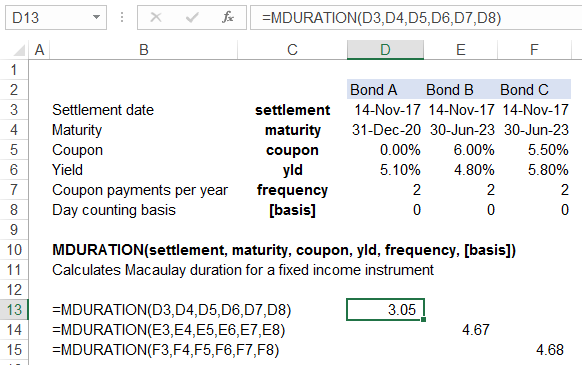
Bond Duration | Formula | Excel | Example
Post a Comment for "38 risk of zero coupon bonds"